

Sponsored content provided by The Table Food Consultants
It’s been one hell of a year.
Interest rates have climbed, coffee prices have hit record highs, egg shortages have come and gone, and food, freight, insurance and wage costs continue to rise. New legislation is arriving, global conflicts are disrupting supply chains, and customers are more price conscious than ever.
Meanwhile, hospitality operators are still trying to fill rosters, negotiate with suppliers, retain good staff, deliver a great guest experience and ensure there is enough cash flow at the end of the week to do it all again next week.
And if we’re honest, hospitality looks very different to the industry we were operating in 12 months ago. While industry conversations often focus on the future, many operators are simply trying to get through this week’s service while making sure there is enough money in the bank to pay wages next month.
It’s a balancing act.
But perhaps that’s also where the opportunity lies.
For years, hospitality has looked for savings and efficiencies in the same places: food cost, labour cost, utilities and menu pricing. Yet some of the biggest opportunities in our businesses are often hiding in plain sight. Waste, procurement, supply chains, skills and training, packaging, energy and water, and operational systems all influence the success of a business far more than many operators realise.
Not because they’re trendy, but because they directly impact profitability, resilience and long-term success.
A Different Way of Thinking
If I say sustainability, half of you have probably already tuned out.
Fair enough.
For years the conversation around sustainability has been dominated by targets, reporting, compliance, policy and a heavily loaded word that means something different to almost everyone who uses it. In some cases, it has even become a little greenwashed.
Most hospitality operators aren’t lying awake at night worrying about sustainability. They’re worrying about food costs, labour costs, freight costs, waste, margins and whether there will be enough cash in the bank to pay wages next month.
At The Table Food Consultants, we’ve increasingly found ourselves talking less about sustainability and more about longevity.
If we were looking for synonyms for the word sustainability, perhaps we’d use words like resilience, viability, maintainability or permanence. Because ultimately that’s what we’re talking about: building businesses that can survive and thrive over the long term. Businesses that balance people, planet and profit in a way that actually works, not in theory but in practice.
The venues that thrive over the next decade won’t necessarily be the biggest, although they can still be the trendiest. They’ll be the businesses that understand their numbers, invest in their people, strengthen their supply chains and identify opportunities others overlook. They’ll reduce waste because it makes commercial sense, train and retain staff because skills matter, and make decisions with the long game in mind.
Where the Opportunity Really Lies
Many of the conversations currently happening under the banner of sustainability are really conversations about profitability, risk management and resilience.
Food waste isn’t just an environmental issue. It’s a profitability issue. Procurement isn’t just a purchasing decision. It’s a resilience strategy. Training isn’t just a people initiative. It’s an investment in operational stability. Supply chains aren’t just logistics. They’re business continuity.
Packaging isn’t just another thing arriving through the back door with your suppliers. It’s something you also need to pay to remove. One of the few things in hospitality we often pay for twice. Increasingly, it’s also becoming part of the guest experience. Guests care where products come from, how they’re packaged and how businesses operate, not because they’re reading sustainability reports, but because they’re deciding where to spend their money.
At The Table Food Consultants, this is where we spend most of our time. Working with hospitality businesses to identify practical opportunities that improve profitability, strengthen operations and build resilience for the future. Sometimes that’s food waste. Sometimes it’s procurement, menu design, training or supply chains.
The common thread isn’t sustainability.
It’s helping businesses become stronger.
And yes, we use sustainability principles to get there.
We work with operators to better understand their numbers, reduce unnecessary costs, engage their teams and build businesses that are commercially successful while creating positive outcomes for people and the planet.
When we start looking at hospitality through that lens, the conversation changes. Sustainability stops feeling like another item on the to-do list and starts becoming a practical business tool. Not because it’s fashionable, but because it works.
Continuing the Conversation at Fine Food Australia
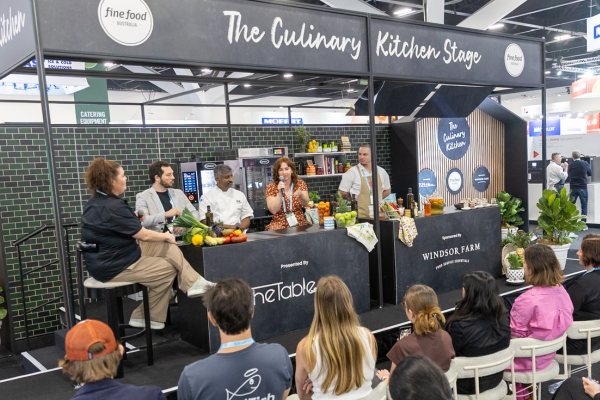
That’s exactly why we’re proud to be returning to Fine Food Australia as curators of the Culinary Stage.
Across four days we’ll be bringing together chefs, operators, suppliers and industry leaders to share practical ideas, challenge conventional thinking and explore where profit might be hiding in plain sight.
Alongside the sessions, we’ll be bringing our Trash to Cash activation and our daily Networking Behind the Pass events everyday at 4pm. Opportunities to share ideas, make connections and continue the conversations that don’t always happen during service.
If you’d like to look at your own business through a different lens, we’d love to have a conversation.
Book a call with The Table Food Consultants.
Fine Food Australia 2026 takes place 31 August – 3 September at the Melbourne Convention & Exhibition Centre. Four days, thousands of products, and one unmissable event for Australia’s foodservice and hospitality industry. Discover the latest in food, drink, equipment and technology, connect with suppliers, source new products and attend live demonstrations, all under one roof. Entry is free for trade professionals. Register now →