

Commercial kitchen profitability, Rising costs, shrinking margins and constant operational pressure are redefining how kitchens need to operate. According to Andrew Briese, Founder of Cooking the Books, profitability now relies less on instinct and more on discipline, consistency and intelligent systems. His core message is simple: a kitchen becomes profitable long before a dish reaches the pass.
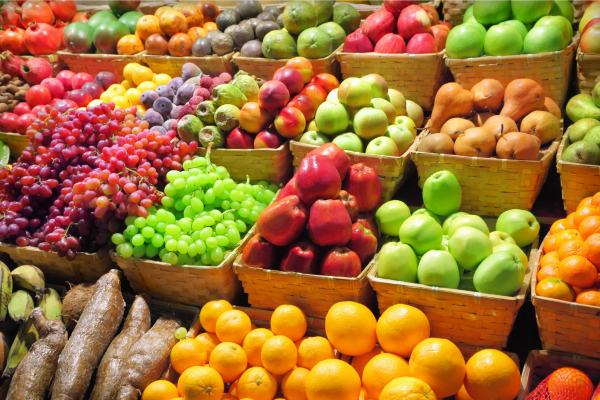
Smart Purchasing Begins With Purpose, Not Price
Many kitchens lose money before the cooking even begins. Andrew observes that chefs sometimes buy premium produce that doesn’t match the task, such as paying top price for mushrooms that are chopped into sauce. As he puts it, throwing away unnecessary trimmings or buying beyond the requirement is “throwing your pay rise away,” a reminder that waste often hides inside daily routines rather than obvious mistakes.
Smarter purchasing begins with asking: What is the best product for the intended purpose? In many cases, seconds or alternative cuts deliver identical quality at a fraction of the cost.
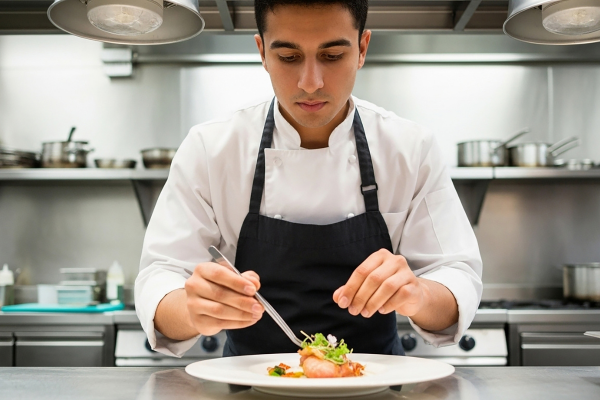
Portion Control: The Hidden Profit Lever Most Kitchens Ignore
Andrew highlights portioning as one of the most overlooked contributors to profit loss. A minor 50-gram overserve on a steak feels harmless in a single service, yet across a year it can erode more than $2,000 in profit and over $26,000 in lost sales.
“It’s only 50 grams,” Andrew says, “but that 50 grams is sitting inside every serve.” For him, digital scales are non-negotiable because they turn a subjective task into a measurable, repeatable process. Portioning is where kitchens quietly win or lose money every day.
Recipe Cards Are Operational Infrastructure, Not Admin
Andrew is firm that no kitchen can claim consistency without recipe cards. They form the backbone of training, costing, quality control and customer experience. A recipe isn’t simply a list of ingredients; it is a communication tool that standardises expectations across every shift and every staff member.
Recipes must be visible, accessible and detailed enough to ensure the dish is executed the same way whether cooked by the head chef or a new apprentice. Visual references, steps, hints, plating notes and allergens all matter. “Everyone should see them,” Andrew says, because consistency is not one person’s responsibility; it is the system’s responsibility.

Cost Sheets Reveal Reality, Not Expectations
While recipes guide flavour, cost sheets guide longevity. Andrew notes that only a small percentage of chefs run cost sheets robust enough to survive today’s fluctuating environment, where ingredient prices shift weekly. Cost sheets must reflect live data , not what items cost two months ago, otherwise decisions are built on false assumptions.
He insists that cost sheets must account for both food and labour, and that the combined percentage should sit below 55 percent to sustain profitability.
To Make or Buy? The Answer Depends on Labour
Traditional thinking tells chefs to make everything from scratch. But Andrew argues that modern labour costs demand a different approach. A house-made cake may have an attractive food cost, yet once labour is factored in, its true cost can exceed 60 percent. Meanwhile, a high-quality purchased product might have a higher food cost but almost no labour, making it more profitable overall.
“It’s not about always making or always buying,” he explains. “It’s about making educated decisions for your venue.”
Gross Profit, Not Cost Percentage, Determines the Health of a Menu
Andrew challenges one of the most ingrained habits in kitchens: obsessing over food cost percentages. He illustrates this with a comparison: a chicken dish running at 33 percent food cost and a steak at 50 percent. Chefs instinctively favour the lower percentage, yet the steak returns more actual dollars to the business. “So which one do you want to sell?” he asks.
The answer is the dish that puts more money in the bank, not the one with the prettiest percentage. Gross profit tells the real story of whether a menu is working.
The Bottom Line: Profit Isn’t Found in the Pass, It’s Built Into the System
Across Andrew’s insights, one theme is unmistakable: kitchens don’t become profitable by working harder. They become profitable by working smarter.
That means buying with intent, portioning with precision, standardising recipes, costing with accuracy, updating data often and making labour-conscious choices. Creativity stays essential… but today’s kitchens thrive when creativity is paired with commercial intelligence.
“Chefs are artists,” Andrew says, “but today’s climate demands they become savvy operators too.”
The kitchens that succeed are the ones where passion and profitability operate side by side.
Find out more about Cooking the Books.
Enjoy insights like this? Subscribe to the Fine Food Australia to stay in the loop.