

Sponsored content provided by Creative Ingredients
Walk into a modern kitchen today and you’ll notice something subtle, but significant: desserts are moving back in-house.
Not as a nostalgic return to tradition but as a strategic shift in how hospitality venues define themselves.
For years, gelato and pastry were often outsourced to specialists or large-scale producers. Now they are becoming central to the identity of restaurants and cafés again. Not just as menu items, but as signature expressions of craft.
Because desserts are no longer the final course.
In many venues, they are becoming the reason guests return.
But this shift comes with a reality that every chef understands: pastry and gelato are unforgiving disciplines. They demand precision. And precision, in a modern kitchen, is increasingly difficult to maintain under pressure.
When small variables become big problems
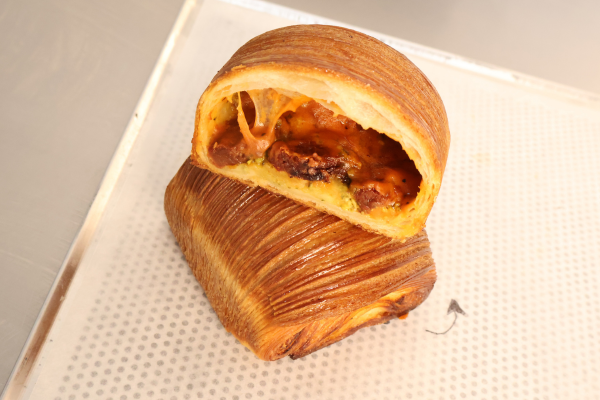
If you’ve ever watched a custard split mid-service, or pulled a batch of choux that didn’t rise, you know how quickly confidence in a kitchen can shift.
The expectation is simple: every dessert, every service, exactly the same.
The reality is far less stable. Different staff, different shifts, limited time, and constant pressure to deliver.
It’s Friday night. Covers are peaking. A pastry component hasn’t set correctly and there’s no time to restart it. In that moment, precision stops being a technical detail it becomes operational risk.
And this is where pastry and gelato separate themselves from many other kitchen processes. They don’t forgive inconsistency.
Temperature. Timing. Mixing. Structure. Each variable directly shapes the outcome, and even small deviations can be the difference between success and failure.
Traditionally, chefs have relied on experience and instinct to manage this. And that expertise is still essential.
But it is no longer enough on its own.
“It takes a lot of the guesswork out of service.”
“You’re not chasing inconsistencies anymore.”
That shift in day-to-day pressure is becoming increasingly common across kitchens that are rethinking how they approach production.
A changing kitchen landscape
Across the industry, the conditions behind the pass are shifting.
Labour shortages continue to impact hospitality teams. Kitchens are operating with fewer specialised staff. At the same time, expectations have not softened, they have increased.
Guests expect high-quality, house-made desserts whether they are dining in a fine dining restaurant or a casual café environment.
This creates a clear tension for operators: how do you maintain artisan quality while working within tighter constraints?
The answer many are arriving at is not to reduce ambition, but to rethink process.
Because consistency is no longer a “nice to have”. It is the foundation of modern hospitality.
“We just didn’t have the pastry labour anymore to rely on manual production every day. Something had to change.”
Where craft meets control
Pastry cream is a good example of just how delicate these processes are. It requires precise heat application and continuous movement to achieve a smooth, stable texture. Too much heat and it splits. Too little and it never sets correctly.
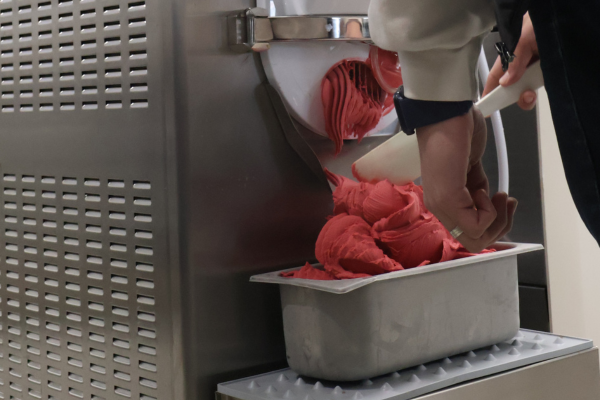
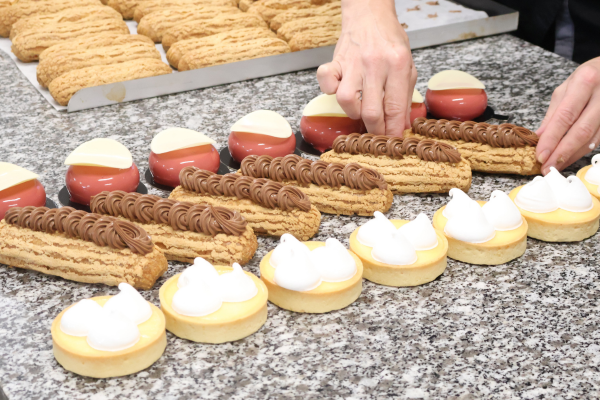
Choux pastry relies on controlled evaporation and structure formation at exact stages of cooking. Gelato depends on a carefully balanced interaction between sugars, fats and air incorporation during freezing.
These are not forgiving processes.
For generations, they have been managed manually guided by skill, repetition and intuition. Those skills remain fundamental to the craft.
But what is changing is how kitchens protect those outcomes under pressure.
Modern systems do not replace technique. They stabilise it.
By controlling temperature curves, standardising mixing speeds and automating critical stages of production, equipment reduces the variability that leads to failure. Not by removing the chef but by removing the uncertainty around execution.
The result is simple: fewer points of risk, more consistent outcomes, and more time for chefs to focus on development rather than correction.
“The biggest difference is consistency. You just don’t get those random failures anymore.”
Making in-house production viable again
One of the most significant shifts in recent years is accessibility.
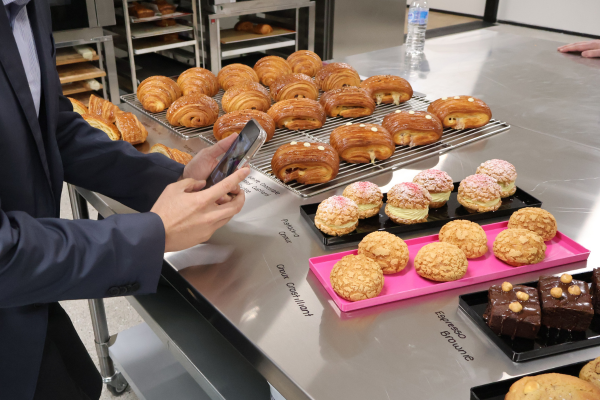
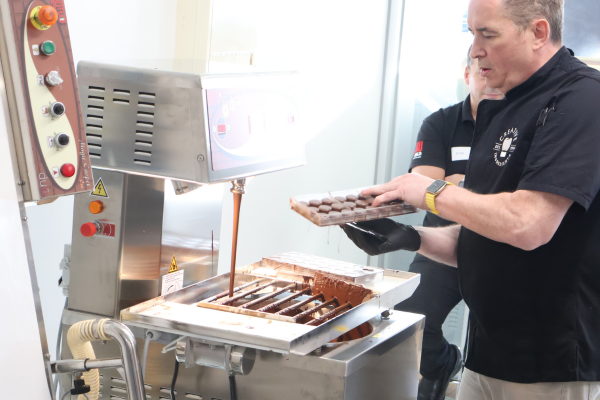
Where gelato or pastry production once required dedicated teams, multiple machines and significant space, integrated systems now allow multiple stages of production to happen within a single controlled environment.
Mixing, cooking, cooling and freezing can be consolidated into one workflow. For smaller kitchens, this is not just efficient, it is enabling.
It allows venues to take ownership of their dessert offering without overwhelming their team or their kitchen footprint.
At Creative Ingredients, we are seeing this shift firsthand.
The conversation is no longer about whether in-house production is possible. It is about how to achieve it without increasing operational strain or compromising consistency.
That shift in mindset is significant.
Because it reflects a broader change in hospitality: control is becoming more valuable than scale.
“We’re producing more in-house now than we ever thought we could, but with less stress than before.”
The reality of modern kitchen teams
Another driver of this change is workforce structure.
Experienced pastry chefs are increasingly difficult to find and retain. Many venues now rely on smaller teams with mixed levels of experience.
In this environment, consistency cannot depend solely on individual expertise.
It needs to be embedded in process.
Programmable systems allow recipes to be developed, recorded and repeated with accuracy across shifts and staff members. This doesn’t remove the chef from the equation, it shifts their role.
The chef becomes the designer of the process. The one who defines the outcome, not just executes it every time.
This shift is subtle, but powerful. It protects standards without limiting output.
“It’s easier to train new staff now. The system guides them instead of relying on years of experience.”
Creativity is still the driver
Despite the increasing role of technology, one thing has not changed: guests respond to creativity, not machinery.
A well-balanced sorbet. A delicate choux filled with rich custard. A gelato that captures the essence of a seasonal ingredient.
These experiences are still built on the chef’s understanding of flavour, texture and balance.
What technology changes is the environment in which that creativity operates.
By reducing technical risk, chefs are given more freedom to experiment more confidently. To refine ideas. To push menus further without compromising consistency.
In other words, precision doesn’t replace creativity, it protects it.
“It actually gives you more space to be creative because you’re not worried about the basics failing.”
Where this is heading
The future of pastry and gelato production is not a choice between tradition and innovation.
It is the merging of both.
Across the industry, the most successful kitchens are not those resisting change, nor those blindly adopting automation. They are the ones integrating precision into craft in a way that supports both consistency and creativity.
Because desserts are no longer secondary.
They are strategic. They are expressive. And increasingly, they are what define a venue.
And in that environment, the kitchens that succeed will be the ones that understand a simple truth:
Craft sets the direction. Precision delivers it consistently.